SEMS Voices | Edition 01 | When Hype Outruns Systems: Perspectives from Leaders Across Energy, Materials, and Sustainability
SEMS Voices | Founding Voices of the Society for Energy, Materials & Sustainability (SEMS) respond to a focused question: Which emerging technology in your field is over-hyped, which is underestimated, and why?
SEMS Editorial Office
1/13/20265 min read
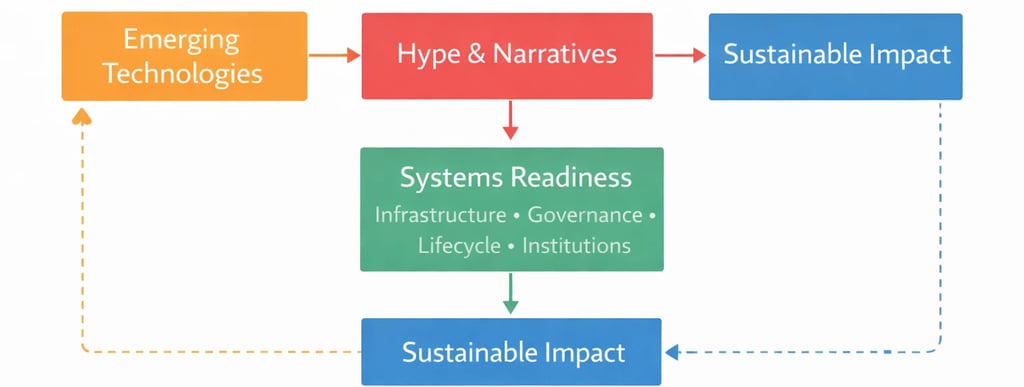
Technological innovation plays a central role in addressing global challenges related to energy security, materials efficiency, and environmental sustainability. Yet history shows that innovation alone is insufficient. When emerging technologies are promoted ahead of system readiness (without adequate infrastructure, lifecycle assessment, or institutional capacity), well-intended solutions risk underperformance or misallocation of resources.
To explore this tension from a practitioner’s perspective, the SEMS Voices | Founding Voices initiative invited Associate Fellows of the Society for Energy, Materials & Sustainability (SEMS) to respond to a focused question:
Which emerging technology in your field is over-hyped, which is underestimated, and why?
The responses came from industry engineers, academic researchers, and policy advisors working across energy systems, water management, advanced materials, bioengineering, and environmental analytics. What emerged was not disagreement, but a striking convergence around one central idea:
The sustainability challenge today is not a shortage of technology, but a shortage of systems-level thinking.
Green Hydrogen: Strategic Promise, Premature Positioning
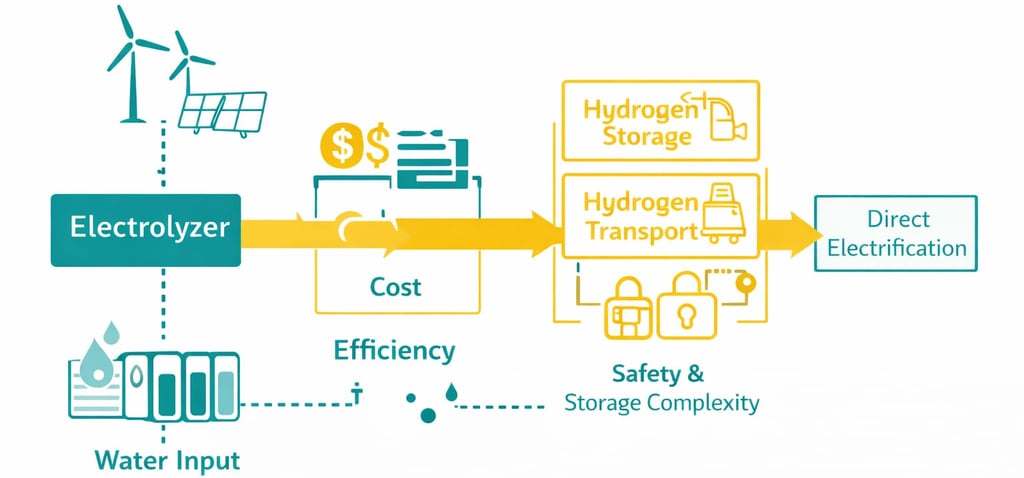
Across multiple disciplines, green hydrogen was identified as a technology whose narrative currently outpaces deployment reality.
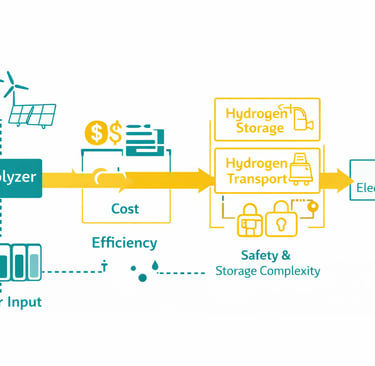
Muhammad Sami, Mechanical Engineer working on manufacturing and energy projects at Utopia Industries, noted that while hydrogen holds long-term promise for decarbonizing hard-to-abate sectors, “present-day electrolyzer costs, low round-trip efficiency, and complex storage and safety requirements limit its near-term industrial viability.” From an operations and maintenance standpoint, he emphasized that practical, system-level solutions often deliver more impact than highly publicized but immature innovations.
This perspective was echoed at the policy level by Samir Sabry Mohamed, Director of Environmental Action Plans at the Egyptian Ministry of Environment. He cautioned that green hydrogen has received “amplified media coverage,” despite persistent challenges related to infrastructure, efficiency, and lifecycle sustainability. He further warned that treating hydrogen as a universal energy carrier risks overshadowing more efficient, sector-specific pathways such as direct electrification.
Similarly, Aamir Khan, researcher in electrochemical energy materials at COMSATS University Islamabad, described hydrogen as “over-hyped as a blanket solution,” arguing that its realistic role lies in targeted applications rather than system-wide substitution.
Together, these voices, spanning industry, academia, and regulation, do not dismiss hydrogen’s future role. Instead, they collectively argue for strategic restraint and contextual deployment, grounded in efficiency and system integration.
AI Without Governance Is Not Sustainability
Artificial intelligence featured prominently across contributions.
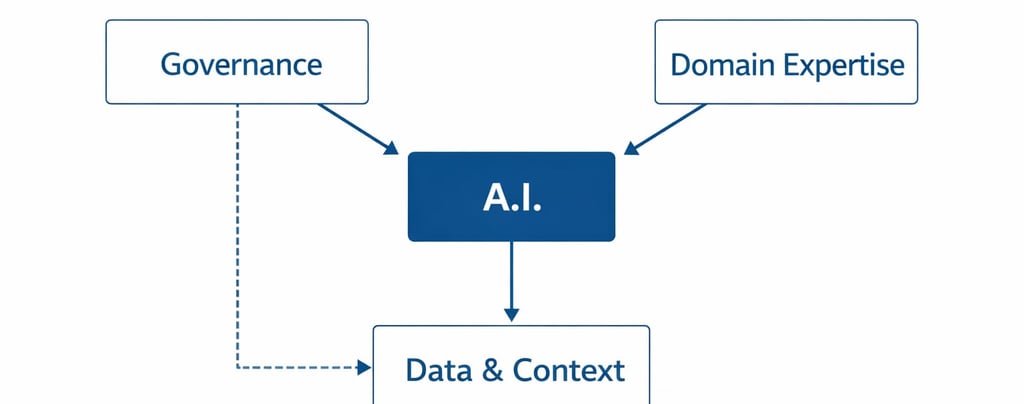
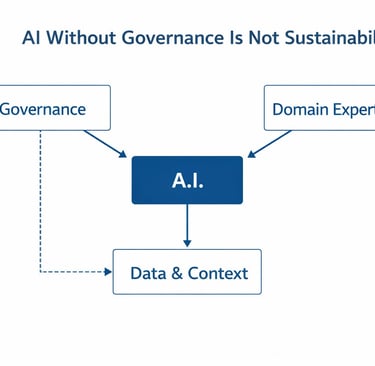
Dr. Nagwa Mohammed M. Khallaf, from Dhofar University, highlighted that AI-driven sustainability dashboards in higher education are often over-hyped, serving reporting functions rather than enabling real transformation when deployed without institutional coordination or sustainability literacy. Drawing on Education for Sustainable Development (ESD) frameworks, she argued that institution-wide integration, not standalone tools, delivers durable outcomes.
From the materials science perspective, Rahool Rai of Universiti Malaysia Pahang Al-Sultan Abdullah cautioned against positioning AI-based materials discovery as a replacement for physics-based understanding. He observed that insufficient experimental data and mechanistic grounding can increase uncertainty rather than reduce it, advocating instead for physics-informed experimentation combined with advanced analytics.
In environmental planning, Dr. Heba Abdelmoteleb Ahmed, Head of Remote Sensing at CEMS PLUS, reinforced this message by warning that AI platforms often promise instant answers without adequate spatial or environmental context. “Without high-quality inputs and expert interpretation,” she noted, “AI risks becoming a sophisticated amplifier of uncertainty rather than a decision-making asset.”
Across domains, the consensus was clear: AI is a tool, not a strategy.
Underestimated Technologies: Quietly Delivering Systemic Impact
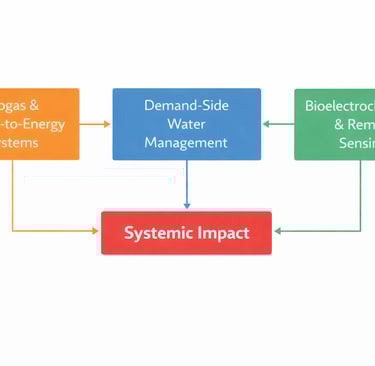
While high-visibility technologies dominated headlines, SEMS Fellows consistently highlighted a different category of solutions as underestimated but deployment-ready.
In energy systems, Muhammad Sami emphasized biogas and waste-to-energy systems, noting their mechanical maturity, compatibility with existing utilities, and dual benefits in energy generation and waste management.
In water and climate governance, Mohammed Ali Husayn, National Water Resources Management Advisor with GIZ Libya, challenged the over-reliance on supply-side solutions such as large-scale desalination. Instead, he highlighted the underestimated power of demand-side management, supported by smart metering, non-revenue water analytics, and institutional reform. According to him, “real transformation in water security will not come from technology alone, but from aligning modest technologies with sound governance.”
At the intersection of energy recovery and wastewater treatment, Dr. Mervat Gameel Hassan Hassan of Benha University highlighted bioelectrochemical systems as overlooked yet powerful tools capable of delivering decentralized, circular energy-water solutions. Meanwhile, Dr. Heba Abdelmoteleb Ahmed positioned remote sensing as a critical but undervalued form of early environmental intelligence, capable of revealing cumulative risks long before they appear in conventional assessments.

Materials and Membranes: Deployment Reality vs Laboratory Hype
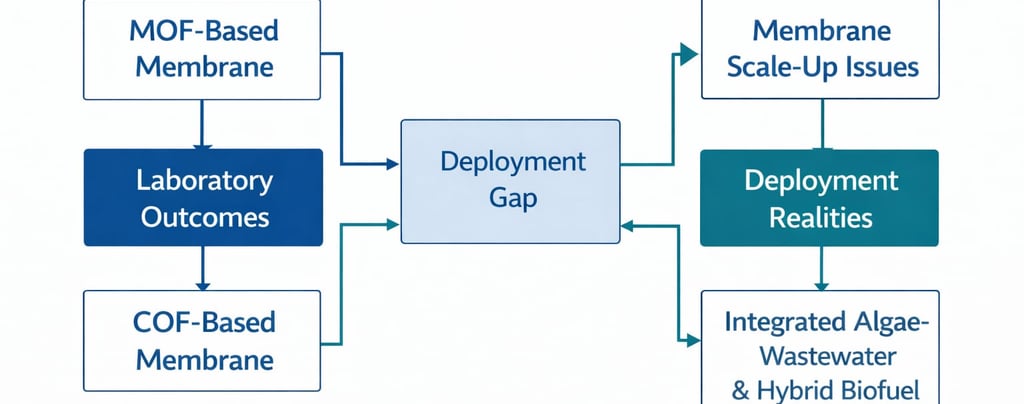
In advanced materials and membrane science, contributors offered candid reflections grounded in real-world deployment challenges, highlighting the persistent gap between laboratory promise and scalable implementation.
Narendra Basel, researcher at the Institute of Process Engineering, Chinese Academy of Sciences, identified MOF-based membranes as frequently over-hyped due to unresolved issues related to scalable, defect-free fabrication, polymer compatibility, and long-term operational stability. In contrast, he emphasized that COF-based membranes, benefiting from covalent framework stability and well-defined nanochannels, remain comparatively underestimated despite offering stronger prospects for practical deployment.
A complementary perspective was provided by Dasari Hindu Bhavani, PhD researcher, who focused specifically on membrane-based water treatment technologies. She observed that single-layer graphene desalination concepts are often promoted as transformative due to their theoretical ultra-high permeability and near-perfect selectivity. However, she noted that challenges associated with large-scale fabrication, defect control, mechanical robustness, fouling resistance, and long-term stability continue to limit their near-term applicability.
Beyond separation technologies, contributors from the bioenergy domain also underscored the importance of system integration over idealized performance. Dr. Gyanendra Tripathi of Integral University Lucknow and Dr. Mohammad Ashfaque Khan, Associate Editor of Renewable Energy and Sustainable Development, critiqued large-scale algal biofuel production as a near-term substitute for fossil fuels. Instead, they emphasized the underestimated potential of integrated algae–wastewater treatment systems and hybrid biological–catalytic biofuel pathways, aligned with circular bioeconomy principles and co-benefit generation.
Collectively, these perspectives converge on a common conclusion: bridging fundamental materials science with manufacturable, system-compatible architectures—rather than pursuing idealized materials in isolation—is likely to define meaningful progress in sustainable separation and energy technologies.
A Collective Position from SEMS Founding Voices
Across disciplines, sectors, and regions, SEMS Associate Fellows converged on a shared insight:
Sustainable progress is not driven by headline technologies, but by technologies that align with governance, infrastructure, and system realities.
SEMS Voices does not seek to rank technologies or declare winners. Rather, it aims to re-center the sustainability conversation around evidence, deployment experience, and institutional context, drawing on the authority of those actively shaping systems on the ground.
As SEMS grows, this initiative will continue to surface experience-driven perspectives that challenge oversimplified narratives and contribute to more grounded, responsible pathways for energy, materials, and sustainability transitions.
SEMS Voices | Founding Voices
Curated perspectives from Associate Fellows of the Society for Energy, Materials & Sustainability